Vyan

Showing posts with label Hamdi V Rumsfeld. Show all posts

Sunday, June 10

Powell: Close Gitmo Now!

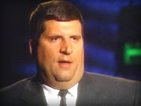
This morning on Meet the Press former Secretary of State Colin Powell strongly denounced America's use of Guantanemo Bay to detain terrorist suspects as well as the Military Commission system which so far, has completely failed to implement justice for even a single detainee.

Watch it:

[It's] a major problem for America’s perception. Iif it was up to me, I would close Guantanamo — not tomorrow, this afternoon.
But it's not like he would simply let them go....
I would simply move them to the United States and put them into our federal legal system.
Preempting the argument that this might give some of them "access to lawyers" and "habeas corpus".
So what? Let them. Isn’t that what our system’s all about? And oh, by the way, we have over 2 Million people in our jails who all had access to lawyers and habeas corpus - we know how to handle bad people in this country.
Then he truly hit the nail on the head when it comes to why some in our government continue to insist on the need for Gitmo.
[E]very morning I pick up a paper and some authoritarian figure, some person somewhere, is using Guantanamo to hide their own misdeeds,
That's right kiddies, we've been hiding these people in Gitmo not because of what they've done - but because of what we've done to them in our efforts to gain information using illegal methods. The entire Military Commissions Act was designed to protect and hide the use of coercive interrogation techniques, to allow for the use of that coereced evidence and even stripped away the 5th amendment protection against self-incrimination. As Jonathan Turley has pointed out...
It's only through Habeas, that you have access to all your other rights.
By striping Habeas from "alien unlawful enemy combatants" the MCA attempted to block access to all of their rights, because without that one - none of the others can even be addressed. This strategy was the perfect follow-on to the Detainee Treatment Act of 2005 which claimed to prohibit torture, yet at the same time blocked the ability of detainees to bring mistreatment claims before a court in their own defense. So sure, "we don't torture" - but if we did, there's nothing anyone can do about it is there?

Exactly why some people seem enamoured with this Jack Bauer bullshit is beyond me. It doesn't even work in fantasyland. Last night I saw a 24 rerun, where they captured CTU techinician Gial after he had been helping the Salazar Cartel as Jack broke it's leader out of prison. Ryan Chappele ordered chemical torture techniques to be used on him and guess what... he didn't break. Not until Tony Almeada showed up and let them know he, Gial and Jack had been setting up and undercover sting operation on the Salazars.

Oops.

And now we've taken this cowardly macho bullcrap and implemented it internationally. U.S. CIA operatives are being tried for kidnapping in Italy. Many of our own NATO allies are furious with us over our Secret Prisons.

We don't need to do this, we never did - just as Powell summarized.
[W]e have shaken the belief that the world had in America’s justice system by keeping a place like Guantanamo open… We don’t need it, and it’s causing us far more damage than any good we get for it.
Amen to that.

It's feuling the international Jihad, it's fueling the insurgency. It's part of the perpetual insurgency engine. It's long past time we switched that engine off.

Vyan

Sunday, October 22

By Every Means Unneccesary - Why Habeas is Gone Forever

This week President Bush in his head-long rush for Jack Bauer Justice signed the "Military Commissions Act of 2006 (pdf)", and act which essentially ends the great Writ of Habeas Corpus, allows for coerced and hearsay evidence and codifies various forms of torture as authorized under the law.

But the most shocking element of all of this is the very strong likelyhood that we just might not see the return of Habeas in our lifetimes.

Why not?

Because under the Consitution the Congress actually does have the authority to do what they did - Suspend Habeas.

In Hamdi V Rumsfeld the SCOTUS stated:

Likewise,we have made clear that,unless Congress acts to suspend it,the Great Writ of habeas corpus allows the Judicial Branch to play a necessary role in maintaining this delicate balance of governance,serving as an important judicial check on the Executive 's discretion in the realm of detentions.

Habeas Defined:

The basic premise behind habeas corpus is that you cannot be held against your will without just cause. To put it another way, you cannot be jailed if there are no charges against you. If you are being held, and you demand it, the courts must issue a writ or habeas corpus, which forces those holding you to answer as to why. If there is no good or compelling reason, the court must set you free. It is important to note that of all the civil liberties we take for granted today as a part of the Bill of Rights, the importance of habeas corpus is illustrated by the fact that it was the sole liberty thought important enough to be included in the original text of the Constitution.

Military Commission Act:

No court, justice, or judge shall have jurisdiction to hear or consider an application for a writ of habeas corpus filed by or on behalf of an alien detained by the United States who has been determined by the United States to have been properly detained as an enemy combatant or is awaiting such determination.

U.S. Constitution Under Article I (Limits and Powers of the Congress) states:

The privilege of the Writ of Habeas Corpus shall not be suspended, unless when in Cases of Rebellion or Invasion the public Safety may require it.

In this case the "Invasion" is the ongoing infiltration of the United States by the agents of al Qeada - an endless condition of War where the public safety is always in jeopardy. So when exactly will the "public safety" no longer require it?

Never.

Historically speaking, George Bush isn't the first President to attempt to suspend Habeas. In 1861 President Lincoln Suspended Habeas during the Civil War, and had his decision overtuned by Justice Taney in Ex Parte Merryman.

Ex parte Merryman (literally "from one side," and therefore meaning "on behalf of Merryman") is the case of Lt. John Merryman, of the Baltimore County Horse Guards, who was imprisoned on May 25, 1861, in, of all places, Baltimore's Fort McHenry, on order of Union General Winfield Scott. Union troops had just occupied the city and began arresting suspected secessionists.

In Taney's response he stated:

As the case comes before me, therefore, I understand that the president not only claims the right to suspend the writ of habeas corpus himself, at his discretion, but to delegate that discretionary power to a military officer, and to leave it to him to determine whether he will or will not obey judicial process that may be served upon him. No official notice has been given to the courts of justice, or to the public, by proclamation or otherwise, that the president claimed this power, and had exercised it in the manner stated in the return. And I certainly listened to it with some surprise, for I had supposed it to be one of those points of constitutional law upon which there was no difference of opinion, and that it was admitted on all hands, that the privilege of the writ could not be suspended, except by act of congress.

The clause of the constitution, which authorizes the suspension of the privilege of the writ of habeas corpus, is in the 9th section of the first article. This article is devoted to the legislative department of the United States, and has not the slightest reference to the executive department. It begins by providing "that all legislative powers therein granted, shall be vested in a congress of the United States, which shall consist of a senate and house of representatives."

In 1864 Congress passed a law which fit Haney's requirements and Suspended Habeas for the duration of the War and Reconstruction - this eventually lead to Ex Parte Milligan.

Lambdin P. Milligan and four others were accused of planning to steal Union weapons and invade Union prisoner-of-war camps and were sentenced to hang by a military court in 1864. However, their execution was not set until May 1865, so they were able to argue the case after the Civil War ended.

The Supreme Court decided that the suspension of habeas corpus was lawful, but military tribunals did not apply to citizens in states that had upheld the authority of the Constitution and where civilian courts were still operating, and the Constitution of the United States only provided for suspension of habeas corpus if these courts are actually forced closed. In essence, the court ruled that military tribunals could not try civilians in areas where civil courts were open, even during times of war.

In short, the Congressional Suspension of Habeas in response to a Rebellion (or Invasion) was upheld, and most likely would be upheld again even by the current Supreme Court since Congressional Authorization is exactly what they requested under Hamdi, which leaves all of us pretty much screwed for the foreseable future.

Even a New Congress is unlikely to overturn this law since 34 Democrats in the House and 12 in the Senate supported it - with only a slim margin projected for the Demcratic Majority in November - such a reversal would be far from Veto proof.

There are however some potential bright spots among the darkness.

in response to Hamdan V Rumsfeld John Dean argued against the MCA as it was being drafted.

Since the inception of the Bush Administration's war against terror, the President has claimed - unreasonably and without justification - that the Geneva Conventions do not apply to this war with stateless forces such as al Qaeda (or similar organizations) for they are not signatories to the Geneva Conventions. But Bush is wrong.

The Hamdan Court explained that "Article 3, often referred to as Common Article 3 because ... it appears in all four Geneva Conventions" applies here. Moreover, the Court noted, Common Article 3 prohibits "the passing of sentences and the carrying out of executions without previous judgment pronounced by a regularly constituted court affording all the judicial guarantees which are recognized as indispensable by civilized peoples."

So the question is no longer purely a Constitutional one, but one which begs whether the Military Tribunals which have now been authorized actually satisfy Geneva as "regularly constituted courts". But clearly they do not include "all the judicial guarantees" - since Habeas is regards to "Enemy Combatants" is now non-functional.

Under Article VI it states:

This Constitution, and the Laws of the United States which shall be made in Pursuance thereof; and all Treaties made, or which shall be made, under the Authority of the United States, shall be the supreme Law of the Land; and the Judges in every State shall be bound thereby, any Thing in the Constitution or Laws of any State to the Contrary notwithstanding.

By Ratifying Geneva in 1948, we have made it a part and equal to our own law and Constitution. This is further reiterated by Justice Stevens in Hamdan.

Article 3 of the Geneva Convention (III)Relative to the Treatment of Prisoners of War,Aug. 12,1949, [1955 ] 6 U..S.T.3316,3318,T.I.A.S.No.3364. The provision is part of a treaty the United States has ratified and thus accepted as binding law.See id.,at 3316. By Act of Congress, moreover, violations of Common Article 3 are considered "war crimes," punishable as federal offenses,when committed by or against United States nationals and military personnel. See 18 U.S.C.§2441. There should be no doubt,then,that Common Article 3 is part of the law of war as that term is used in §821.

Even though Bush has attempted to Redefine both Geneva, Torture and War Crimes with this Act - rewriting 18 U.S.C.18 U.S.C.§2441 into a laundry list what allegedly is and isn't covered - the core issue here is still whether these new tribunals are "regularly constituted" and whether this breach of Geneva would actually overide Congresses own legitimate authority to suspend Habeas?

On that point I am far from certain of the outcome.

There is another argument to made however - the Suspension of Habeas under the MCA (quoted above) clearly applies to "Alien Enemy Combatants" not neccesarily U.S. citizens, although U.S. Citizens can clearly be considered Enemy Combatants under this law - Hamdi (who is a U.S. Citizen) supports this view - the disparate treatment here between U.S. Citizens (who still retain some form of Habeas relief) and Non-Citizens who do not may present a 14th Amendment Equal Protection Challenge.

Hamdi was the first case to extend the 14th to cover areas outside the U.S. (such as those being held in Gitmo), this just might be the first case that I know of - if such a challenge is brought - to extend the 14th to Non-citizens under U.S. Jurisdiction and control. There are two suits against the MCA already, time will tell...

Although Habeas is now gone for aliens, the ability to challenge ones status as an Unlawful Enemy Combatant itself has been upheld and is retained in the current law (as part of the Combatant Status Review Tribunal).

``(c) DETERMINATION OF UNLAWFUL ENEMY COMBATANT STATUS DISPOSITIVE.--A finding, whether before, on, or after the date of the enactment of the Military Commissions Act of 2006, by a Combatant Status Review Tribunal or another competent tribunal established under the authority of the President or the Secretary of Defense that a person is an unlawful enemy combatant is dispositive for purposes of jurisdiction for trial by military commission under this chapter.

Basically there are two Tribunals, the first of which is established by the President or SecDef for establish the status of a detainee. (Ironically, this is in according with Geneva, which requires that all persons of unknown status be given a hearing to determine their status). Under both the MCA and the Detainee Treament Act of 2005, the findings of the CSRT can be appealed to the DC Circuit Court.

This Judicial Obsticle Course is at least a maginal improvement over the current sitaution where we already know most of the combatants held at Gitmo are innocent and we've refused to release them.

[A deposition by Brig. Gen. Karpinski's (former Abu Ghraib CO)] cited the comments of another official, Maj. Gen. Walter Wojdakowski, who told her, "I don't care if we're holding 15,000 innocent civilians! We're winning the war!" A former commander of the 320th Military Police Battalion notes in a sworn statement, "It became obvious to me that the majority of our detainees were detained as the result of being in the wrong place at the wrong time, and were swept up by Coalition Forces as peripheral bystanders during raids. I think perhaps only one in ten security detainees were of any particular intelligence value."

Clearly if one is found by the CSRT to not be an Unlawful Combatant, one would not automatically go free. What should occur - in a far more prefect world than this one - is that they would then be relegated to the regular Civilian or Courts Marshal as a "Lawful Enemy Combatant". The CSRT itself is far from a "Get out of GITMO Free" Card. If the CSRT finding is "Unlawful", the detainee then skips "Go" and heads forward to his Military Tribunal Only if the President subsequently seeks to press charges -- if he does not, that person disappears into a black hole. Forever.

The very existence of this law is extremely onerous - particular the section which reduces the Geneva-based prohibitions against "Offenses to Personal Dignity" and instead prohibits torture - sort of.

TORTURE: Any person subject to this chapter who commits an act specifically intended to inflict severe physical or mental pain or suffering (other than pain or suffering incidental to lawful sanctions) upon another person within his custody or physical control for the purpose of obtaining information or a confession, punishment, intimidation, coercion, or any reason based on discrimination of any kind, shall be punished, if death results to one or more of the victims, by death or such other punishment as a military commission under this chapter may direct, and, if death does not result to any of the victims, by such punishment, other than death, as a military commis-sion under this chapter may direct.

...

The term `serious physical pain or suffering'
means bodily injury that involves--
``(I) a substantial risk of death;
``(II) extreme physical pain;
``(III) a burn or physical disfigurement of a
serious nature (other than cuts, abrasions, or
bruises); or
``(IV) significant loss or impairment of the
function of a bodily member, organ, or mental
faculty.

Guess what folks, the Bybee memo is now the law. A simple reading makes it plainly obvious that non-lethal methods of humiliation, and "non-severe" pain, which leave no visible marks, burns, cuts or abrasion and do not risk "organ failure" -- are absolutely permissable. This act is like a "How To" manual on how to became a Totalitarian Dictatorship, which is further underscored by the fact that coerced testimony is now allowed

STATEMENTS OBTAINED BEFORE ENACTMENT OF DETAINEE
TREATMENT ACT OF 2005.--A statement obtained before December
30, 2005 (the date of the enactment of the Defense Treatment
Act of 2005) in which the degree of coercion is disputed may be admitted only if the military judge finds that--
``(1) the totality of the circumstances renders the statement reliable and possessing sufficient probative value; and
``(2) the interests of justice would best be served by admission of the statement into evidence.

And for coercion which occured after the DTA this is added:

``(3) the interrogation methods used to obtain the statement do not amount to cruel, inhuman, or degrading treatment prohibited by section 1003 of the Detainee Treatment Act of 2005.

What is most tragic here, is the well known fact that Coercive Interrogation Techniques Simply don't Work. The subject is more likely to lie and fabricate than actually provide valid information. These heavy-handed uber-macho measures by the Administration are completely unneccesary. Ibn al-Libi was tortured and lied to us. Abu Zubaydah actually gave us some good information before he was tortured, then started lying after he was. If we want good and accurate information to protect Americans, coercian and pseudo torture is not the way - and it completely destroys the moral justification for our War against terror when we behave like terrorists.

Innocent muslims such as Abu Omar and Maher Arar have already been unlawfully detained (kidnapped actually in Omar's case) rendered to Egypt and Syria where they were tortured.

In Iraq AP Reporter Bilal Hussein has been held by U.S. Forces for the past five months - without a hearing.

These are not isolated cases - to date the U.S. nearly 50,000 people under detention worldwide. We're talking about a major humanitary crises here.

But if you listen to the Wingnut Brigade, the Human Rights and Dignity of these individuals of no concern to them what so ever - the goal of this law is FEAR - especially the fear into the New York Times and WaPo Editorial Board.

From RedState.com

One sees immediately why the definition of treason makes the Washington Post editorial board queasy. If they vacation in the Caribbean (how déclassé) they would prefer it not be at Club Gitmo and definitely not preceded by Donald Rumsfeld's bully boys kicking in their door, being flexi-cuffed, tossed in a blacked out LearJet with bogus registration numbers, dressed in an orange jumpsuit and then allotted a no-amenities guest room with Abdul.

Let's get serious - this isn't about stopping the next major bombing attack on U.S. Soil - it's about shutting up James Risen and all the reporters who've released classified material (like Bob Woodward) which happen to be a) True and b) Display a propensity for the Bush Administration to violate the law (such as FISA).

Now they've managed to use the law itself to justify their lawbreaking. Undoing this law completely will be difficult if not impossible until the Presidency changes hands, and even if it is corrected the damage to our international prestige may in fact be permenent. Meanwhile Al Qaeda is laughing at us as we gradually destroy ourselves and our own values.

Heckuvajob Bushie.

Vyan

Tuesday, October 17

Habeas Corpus dies with nary a whimper

From Thinkprogress:

President Bush signs the "Military Commissions Act of 2006″ today in the Rose Garden, a bill that will not grant detainees legal counsel. "Also, it specifically bars detainees from filing habeas corpus petitions challenging their detentions in federal courts." The new law sets the stage for what many analysts believe will be yet another historic showdown between the courts, the president, and Congress.

That's putting it mildly.

But what's so truly amazing about this event, is how little it's being covered, how little it's being noticed and how there is pratically no outcry at the undermining of our constitutional foundations what-so-ever.

That isn't to say that there hasn't been a reaction. Even before the legislation was signed two lawsuits were filed.

The new legislation, passed a week ago Friday, bars judges from hearing detainee lawsuits. Instead, it sets up a much more limited appeals process for detainees who are seeking to challenge their designation as an enemy combatant or to challenge a war crimes conviction by a military commission.

One suit was filed on behalf of Majid Khan, one of the 14 so-called high value Al Qaeda suspects recently transferred from secret Central Intelligence Agency prisons to the terrorist detention camp at Guantánamo Bay, Cuba. The other was filed on behalf of 25 detainees being held among some 500 men at Bagram Air Force Base in Afghanistan.

The outstanding question of course is whether this law actually bars these suits themselves, a decision which will have have to wait until a judge decides whether a judge can decide on this matter. Talk about Catch-22.

Major news outlets have virtually ignored this story, allowing the President's rhetoric about "our desperate need to question detainees" being one of our most "vital tools" in the War on Terror. The fact that the people who we are coercively questioning may not be terrorists at all doesn't seem to enter into his thinking.

From Yahoo News:

KABUL, Afghanistan - Sixteen Afghans and one Iranian released from years in captivity at Guantanamo Bay prison arrived in Afghanistan on Thursday, an Afghan official said, maintaining that "most" of the detainees had been falsely accused.

The 16 Afghans appeared at a news conference alongside Sibghatullah Mujaddedi, head of Afghanistan's reconciliation commission, which assists with the release of detainees from the American detention center at Guantanamo Bay, Cuba, and the U.S. prison at the Bagram military base north of Kabul.

Mejadedi said many of the detainees, who are now free, had served up to four years in Guantanamo. He said "most" of the prisoners were innocent and had been turned in to the U.S. military by other Afghans because of personal disputes.

"For four years they put me in jail in Cuba for nothing," said Shah, a doctor from the eastern province of Paktia whose hands shook from nervousness when he spoke.

"All these people (the other prisoners) and all those Afghans still in Cuba, they are innocent," he told reporters. "All were arrested because of false reports, and the Americans, without investigating, they arrested innocent people and put them in jail for a long time."

Another former prisoner, 20-year-old Habib Rahman, said he was arrested because he had a weapon in his home.

"They told me, 'You are against us, you are anti-American and anti-government and you are fighting with us,'" said Rahman. "At that time in our area everyone had weapons. I was innocent and I hadn't participated in any fighting."

Rahman said that he was treated harshly at Guantanamo, and was once kept awake for 38 hours while being questioned about ties to terrorists.

"The last time they tortured me like that was four months ago," he said. "They were kicking us all the time, beating us with their hands."

Please note that Rahman is 20-years-old now, that means that when he was taken to Gitmo - he was only 16.

Many of the detainee currently at Gitmo were actually sold into captivity by Afghan warlords.

Bounties ranged from $3,000 to $25,000, the detainees testified during military tribunals, according to transcripts the U.S. government gave The Associated Press to comply with a Freedom of Information lawsuit.

A former CIA intelligence officer who helped lead the search for Osama bin Laden told AP the accounts sounded legitimate because U.S. allies regularly got money to help catch Taliban and al-Qaida fighters. Gary Schroen said he took a suitcase of $3 million in cash into Afghanistan himself to help supply and win over warlords to fight for U.S. Special Forces.

Even though the ACLU has obtained a literal mountain of documention via the Freedom of Information Act - the issue of how these people, many of them innocent, are being treated still falls on deaf ears. Even when ABC News features reports of abuse from a former Gitmo Marine.
From Thinkprogress:

President Bush has consistently touted the U.S. detention facility in Guantanamo Bay as a "model prison," saying the American people should "ftake great pride" in the facility.

But a sworn statement by Marine Sgt. Heather Cerveny paints an entirely different picture. Cerveny has described how "she met several Navy prison guards at a club on the base where, over drinks, they described harsh physical abuse" of Gitmo detainees. The guards alledgedly told Cerveny of practices including "hitting the detainee's head into the cell door" and "punching [them] in the face." The Pentagon Inspector General today announced a new investigation into the claims.

Cerveny gave her first public comments on her charges last night to ABC News. You can read Cerveny's affidavit to the Pentagon Inspector General here (pdf).

Here's what Amnesty International (who over a year ago called for the Prosecution of George W Bush for War Crimes) has to say on the subject:


The past five years have seen the USA engage in systematic violations of international law, with a distressing impact on thousands of detainees and their families. Human rights violations have included:

o Secret detention
o Enforced disappearance
o Torture and other cruel, inhuman or degrading treatment
o Outrages upon personal dignity, including humiliating treatment
o Denial and restriction of habeas corpus
o Indefinite detention without charge or trial
o Prolonged incommunicado detention
o Arbitrary detention
o Unfair trial procedures

Yet at the same time, US officials have continued to characterize the USA as a "nation of laws" and one that in the "war on terror" is committed to what it calls the "non-negotiable demands of human dignity", including the "rule of law".

...

There is a stark "disconnect" between the USA and the international community. After all, President Bush's speech came only weeks after two expert United Nations bodies - the Committee against Torture and the Human Rights Committee - told the US government that secret detentions violated the USA's international treaty obligations. In effect, the President was rejecting the conclusions of these UN bodies, as well as admitting that the USA had resorted to enforced disappearance, a crime under international law.

The response of the US administration to the Hamdan v. Rumsfeld ruling has perhaps been even more shocking, although apparently not shocking enough to nudge Congress finally into calling the executive to account for "war on terror" abuses. Indeed, President Bush's defence of the CIA's program of secret detention and "alternative" interrogation techniques policy, which he said had been called into question by the Hamdan ruling and therefore needed congressional approval, showed an administration in assertively unapologetic mood.

Again, one can begin to trace the administration's manipulation of the law to fit its policy. According to a document recently issued by the Director of National Intelligence, after "high-value" detainee Abu Zubaydah was captured in Pakistan in March 2002 and handed over to the USA, he stopped "cooperation" with his US interrogators. In order to overcome this lack of cooperation, "over the ensuing months, the CIA designed a new interrogation program" and "sought and obtained legal guidance from the Department of Justice that none of the new procedures violated the US statutes prohibiting torture."

Any such claim of legality rings hollow. For until the Detainee Treatment Act was passed in December 2005 (in the face of executive opposition), Department of Justice lawyers took the position that because of the reservation attached to the USA's ratification of the Convention against Torture in 1994, the USA had no treaty obligation on cruel, inhuman or degrading treatment with respect to foreign nationals held in US custody overseas. In addition, in August 2002, the Justice Department provided legal advice in a memorandum which only came to light in mid-2004 after the Abu Ghraib torture revelations. It was reportedly written in response to a CIA request for legal protections for its interrogators. The memorandum stated among other things that interrogators could cause a great deal of pain before crossing the threshold to torture, that there were a "significant range of acts" that might constitute cruel, inhuman or degrading treatment but would not rise to the level of torture and be prosecutable under the US torture statute, and that the President could override international or national prohibitions on torture.(1)

Conservatives have scoffed at claims that Zubaydah was "tortured" claiming that they simply kept the lights on and played Red Hot Chili Peppers music for hours. In a nation where Jackass Number Two is a hit movie, bright lights and loud music could hardly be considered torture - it sounds more like a RAVE right? To hear the Right tell it, they were just warming him up for Round II of Fear Factor: Electrodes to the Gonads. Let's face it: Torture is likely to be our next Extreme Sport, to be scheduled at the Triple-X Games right after Base Jumping while on fire and swallowing male-cow jism.

But all dark humor aside, Time Magazine and author Gerald Posner paint a different picture:

Posner elaborates in startling detail how U.S. interrogators used drugs--an unnamed "quick-on, quick-off" painkiller and Sodium Pentothal, the old movie truth serum--in a chemical version of reward and punishment to make Zubaydah talk. When questioning stalled, according to Posner, cia men flew Zubaydah to an Afghan complex fitted out as a fake Saudi jail chamber, where "two Arab-Americans, now with Special Forces," pretending to be Saudi inquisitors, used drugs and threats to scare him into more confessions.
This is known as a "False Flag" operation - where U.S. officials pretend to be Saudi, Egyption or Israeli interrogators who don't have any of the "limits" which U.S. law (used to) place on our own people - and is itself a direct violation of the Geneva Conventions (Article 37).

However, it should be noted that most of the valuable information we received from Zubaydah, such as the identity of "Muktar" as Khallid Sheik Muhammad, and the indentity of Jose Padilla came before he was tortured, not after. Oh, and by the way - Zubaydah is nuts.

Pulitzer Prize-winning author Ron Suskind paints a more complicated picture of Zubaydah. In one of the most hotly discussed sections of his book "The One-Percent Doctrine," Suskind reveals that at least one top FBI analyst considered Zubaydah an "insane, certifiable, split personality" and that he was mainly responsible only for logistics like travel arrangements. According to Suskind's reporting, the interrogation methods used on Zubaydah -- waterboarding and sleep deprivation, among others -- only yielded information about plots that did not exist.

SUSKIND: In the case of Zubaydah, when it comes to some of the harsh interrogation tactics he was put through, what occurred then was that he started to talk. He said, as people will, anything to make the pain stop. And we essentially followed every word and various uniformed public servants of the United States went running all over the country to various places that Zubaydah said were targets, and were not.

Ultimately, we tortured an insane man and ran screaming at every word he uttered.

What has largely worked in all the interrogations, what we got -- and in many cases it's not very much -- but whatever we got, for the most part occurred because we were, let's just say, a little more clever than that. Instead of going medieval, which is the tactic our enemies here embrace, we essentially find a way to confuse their expectations. In many cases, just by treating them as human beings we have created an environment where we get what we so desperately need, which is information that might help save American lives.

That's the key. The key is to not give in to anger, but to do whatever works best. There's clearly been a learning curve on that; some of the harsh techniques used early on have been I think largely abandoned because they didn't work.

So let's review shall we?

We now have an Official Policy of Indefinate Detention without trial, access to a lawyer or a hearing for people who may in all likelyhood be completely innocent. We will be torturing these people even though doing so has repeatedly given us bad information (such as Zubaydah or Ibn Sheik al-Libi who lied to us about Saddam training Al-Qaeda on the use of chemical weapons, or Abu Omar an innocent Egyption man who was kidnapped by the CIA in italy and tortured or Maher Arar the innocent Canadian man who was taken into custody and tortured in Syria) but that using "soft techniques" such as "Treating them like Human Beings" actually works better. Imagine that, eh?

All of this has been implemented as an end-run around Hamdan and 18 US 2441 the War Crimes Act - which then White House counsel Alberto Gonzales claimed in 2002 that if applied might result in "unwarranted charges" against administation officials.

I would argue that they are entirely warranted, and long overdue.

It is also frequently overlooked that the definition of an "Enemy Combatant" does not exclude American citizens. Last Night during his interview with John Ashcroft, Keith Olberman - the lone broadcaster willing to seriously address this subject - put this very question to the former Attorney General:

OLBERMANN: In your new book, you have defended some of the more imposing efforts to fight terror and terrorism, and this subject is particularly relevant right now, because the president is set to sign the Military Commissions Act tomorrow, which is going to codify some of those efforts into law.

I`d like to read one of the definitions in the act and ask you a hypothetical about it, if I may. "The term `unlawful enemy combatant` means -- (i), a person who has engaged in hostilities or who has purposefully and materially supported hostilities against the United States or its co-belligerents who is not a lawful enemy combatant."

What is there in this new law that would check the president--or any president, not in terms of tradition or in terms of common sense nor even in terms of fear of bad publicity--but in that measure itself, if a president claims that you or I materially supported hostilities against America and declares us unlawful enemy combatants and he wants to send you and I off to Guantanamo Bay, where in the law does it say the president can`t do that?

ASHCROFT: Well, let me just first indicate that I have not read this new statute in its completeness.

I do believe that the president should have the authority to designate individuals who bear arms or take up hostility against the United States as enemy combatants. I think in doing so, the president has a responsibility to have a process that is consistent with the Constitution.

We have a president; we don`t have a king. And he has to make a determination based on facts.

Like the determination he made that Saddam Hussein was an imminant threat? The question posed by Olbermann is not an idle one. Jose Padilla is an American Citizen who has already been held as an "Enemy Combatant" without trial for years, as is Yaser Esam Hamdi. Normally it would be the job of the judiciary, an independant body free from the political winds, who would make the determination of what is fact and what is not regarding defendants and detainees (a Constitutional requirement which was recently reenforced by the Supreme Court in Hamdi v Rumsfeld (pdf)) -- but not anymore. Now the President himself can be judge, jury, torturer and even - executioner.

Is this what our nations forefathers fought and died to produce? Are these the actions of a nation which has touted freedom and justice as it's bedrock principles? I would hope and pray not - but with a stroke of a pen, President George W Bush has today murdered not only Habeas Corpus - not only our international moral standing and justification for our war against terror - he may have very well have murdered our democracy itself.

Vyan

Sunday, July 23

One step back from the brink of Totalitarianism

In May I wrote that we are fast approaching a defining moment for the future of our nation.

The Unitary Executive Theory must be permenently quashed as a demented Constitutional aberration that dangerously tips the balance of power completely out of whack.

We are supposed to be a nation of laws, a nation of ideals which our bounded by the articles and amendments of our Constitution. Bush has turned our laws inside out and wiped his ass with the Constitution while this Republican Congress aided and abetted him. Genuflecting at his every abuse.

Ask any Republican friend of yours, if you still have any - would they "Want President Hillary Clinton or President Al Gore to have the kind of power that Bush is nowing claiming with the NSA and 750 signing statements directly contradicing Federal Law?"

If they answer the question honestly, I think they just might surprise even themselves. It's a defining question that goes beyond party affiliation, Red or Blue State, Left-Coast or Fly Over. The answer will determine exactly what kind of nation the United States will be for the next several generations.

It appears now that the very moment I spoke of, may have already occured.This week one of the most signficant events in slowing the steady slide of America toward Totalitarianism took place in a San Francisco courtroom.

SAN FRANCISCO (AP) -- A federal judge Thursday rejected a government request that he dismiss a lawsuit challenging the Bush administration's domestic spying program.

The lawsuit, brought by the Electronic Frontier Foundation, challenges President Bush's assertion that he can use his wartime powers to eavesdrop on Americans without a warrant.

The government had argued that the lawsuit should be thrown out because it threatens to reveal state secrets and jeopardize the war on terror.

The judge issued a 72 page ruling which took the Bush Adminstration to task for it's claims that "state secrets" could be divulged by the persuit of this suit by pointing out that the existence and many of the details of the NSA's warrantless spying program have already been confirmed by the government itself.
"the very subject matter of this action is hardly a secret. As described above, public disclosures by the government and AT&T indicate that A&T is assisting the government to implement some kind of surveillance program" . . . "significant amounts of information about the government's monitoring of communication content and AT&T's intelligence relationship with the government are arleady non-classified on in the public record."

Since 9-11, and in same cases even before, the Bush Administration has sought to gather as much power until itself as it can. Rejecting both the oversight of Congress as well as the iance of the courts in keeping an even balance between the various branches of our government.

We have to face the fact that Bush seeks TOTAL Power. He is a Totalitarian. He claims the ability to spy on anyone he chooses, without judicial review or congressional authorization. To detain them without an indictment, hearing or charges - including American citizens (Hamdi, Padilla) And yes, to torture them. The only thing missing is summary execution - but then again, after over 100 deaths in custody, that may only be a matter of semantics.

Just look at what former State Dept Chief of State Lawrence Wilkerson has said about Bush.
Wilkerson calls Bush an unsophisticated leader who has been easily swayed by "messianic" neoconservatives and power-hungry, secretive schemers in the administration. In a landmark speech in October, Wilkerson said: "What I saw was a cabal between the vice president of the United States, Richard Cheney, and the secretary of defense, Donald Rumsfeld, on critical issues that made decisions that the bureaucracy did not know were being made."

He is particularly appalled by U.S. treatment of enemy detainees, counting at least 100 deaths in custody during the course of the war on terrorism -- 27 of them ruled homicides. "Murder is torture," he says. "It's not torture lite."
But Bushco's aims have been increasing frustred by the courts. Following quickly on the drubbing the Bush Administration received with the Hamdan decision, this ruling has opened a wide crack in the door to the 36 various lawsuits against AT&T and the NSA for violations of privacy and the avoidance of the FISA court - and indicates that my own initial impressions of ramifications of Hamdan were right on the money.
If the AUMF didn't authorize Gitmo, torture or Military Tribunals, it didn't authorize the NSA Spying program either!
The judge makes this point by going not to Hamdan, but to the previous Gitmo detainee case Hamdi v Rumsfeld, where much of Bush's initial theory of executive power was first given a hard bitch-slap by the Supreme Court.
"Even the state secrets privilege has its limit. While the court recognizes and respects the executive's constitutional duty to protect the nation from threats, the court also takes seriously its constitutional duty to adjudicate the disputes that come before it. See Hamdi v. Rumsfeld, 542 US 507, 536 (2004) (plurality opinion) ("Whatever power the United States Constitution envisions for the Executive in its exchanges with other nations or with enemy organizations in times of conflict, it most assuredly envisions a role for all three branches when individual liberties are at stake").

To defer to a blanket assertion of secrecy here would be to abdiate that duty, particularly because the very subject matter of this litigation has been so publicly aired. The compromise between liberty and security remains a difficult one. But dismissing this case at the outset would sacrifice liberty for no apparent enhancement of security."
The issuance of this opinion is unfortunately not the end of the story. The government can still appeal the ruling with the 9th Circuit and yet again the Bush Administration could find itself again before the Supreme court on the issue of limits of it's own power. Also there is pending legislation authored by Arlen Specter which was effectively codify the current methods used by the NSA to avoid FISA, and also shift jurisdiction of all of these cases to that secret court and away from the 9th circuit.

It can not be doubted that the Administration will use every tool in it's arsenal to fight this. As confirmed by Alberto Gonzales, Bush has already denied clearances to members of the Justice department's Office of Personal Responsiblity and effectively shutdown thier investigation of the NSA program, while simultaneously allowing the DOJ's Civil division full access in order to fight suits such as this one.

Some commentary from Anonymous Liberal on this piont:

Imagine for a moment that Bill Clinton had pulled something like this. The Republicans would have gone absolutely batshit crazy. Every single conservative pundit and politician would have jumped all over this, and the shrieking would have been deafening—So repeat after me: "If what the President is doing is legal and proper, why is he so afraid to allow his own Justice Department to investigate? What does he have to hide?"…read on


The likelyhood of Bush prevailing on this issue before the Supreme Court that just released the Hamdan ruling are somewhere between razor thin and nonexistant. The ramifications are that the Administration will respond to any future revelations of illegal wrong-doing under the cover of National Security with abject denial and obfuscation. In fact this may already be occuring.

Just two weeks ago it was reported that Congressmen Pete Hoekstra (R), head of the House Intelligence subcommittee overseeing NSA had written a letter to the President on May 18 that:
"alleged Intelligence Community activities" not described to committee members in classified briefings. "If these allegations are true," he wrote to Bush, "they may represent a breach of responsibility by the Administration, a violation of law and . . . a direct affront to me and the Members of this committee."
These are apparently activities that go far beyond what has been revealed so far and have led to the suit against AT&T for cooperating with the NSA and granting them access to the phone calls and emails of tens of millions of Americans. Something so bad it made a Republican jump up and shout that Bush may have (again) broken the law.

The details of this program have not been revealed, and by law - the Congressmen who have now been briefed on these additional programs can not speak about them without violating national security. However, there may be a clue to what this is via other sources - namely former NSA member Russell Tice who testified before Senate staffers concerning various Special Access Programs (SAP) that he was involved in at NSA on May 17th - one day before Hoekstra letter to President Bush.

Before his testimony Tice stated that what we had heard about so far was only the tip of the iceberg.

A former intelligence officer for the National Security Agency said Thursday he plans to tell Senate staffers next week that unlawful activity occurred at the agency under the supervision of Gen. Michael Hayden beyond what has been publicly reported, while hinting that it might have involved the illegal use of space-based satellites and systems to spy on U.S. citizens. …

said he plans to tell the committee staffers the NSA conducted illegal and unconstitutional surveillance of U.S. citizens while he was there with the knowledge of Hayden. … “I think the people I talk to next week are going to be shocked when I tell them what I have to tell them. It’s pretty hard to believe,” Tice said. “I hope that they’ll clean up the abuses and have some oversight into these programs, which doesn’t exist right now.” …

Tice said his information is different from the Terrorist Surveillance Program that Bush acknowledged in December and from news accounts this week that the NSA has been secretly collecting phone call records of millions of Americans. “It’s an angle that you haven’t heard about yet,” he said.
… He would not discuss with a reporter the details of his allegations, saying doing so would compromise classified information and put him at risk of going to jail. He said he “will not confirm or deny” if his allegations involve the illegal use of space systems and satellitesl

After his testimony Tice said This
"I am set to testify in closed session to the Senate Armed Services Committee about the SAP programs I was involved with at NSA and DoD on Wednesday, 17 May 2006. I am to meet with Senate staffers in the Russell Senate Office Building, in room 228, at 12:57pm EDT. From there, we will immediately be moving to a secure locations that is accredited for SAP level discussions. I apparently will not know where this location is until I am escorted to it on Wednesday."

Click here to read 2 letters penned by Tice on testifying.

Update: Tice email #2, sent out late yesterday: "Update on the Senate Armed Services Committee. I have been told today by the committee minority staff director that I will not be "testifying" to the committee, but rather talking to a few staff members that are cleared at the SAP level. Apparently no senators from the committee will be in attendance at this meeting."
Actually I have concerns that this itself may have been questionable legally. I held a SAR (Special Access Required) Clearance for over a dozen years while working for a Defense Contractor, and SAP level access is literally program specific. It goes beyond "Top Secret Clearance" and requires that a person be specifically cleared for each individual program. Just because someone holds a SAP clearance to one program doesn't mean that they can be given information about a different SAP program. These programs are compartmentalized from each other. I worked along side others who worked on programs I had no knowledge of, this is standard operating procedure, those without a specific "Need to Know" - don't. Although Tice testified under Federal Whistle-Blower protection, the ability of those who he briefed to share that information - even within Congress - is severely limited.

However, it should also be noted that on the very same day as Tice's testimony - Gen Michael Hayden also testified in closed session to the Senate Intelligence Commitee and others. Just look at this exchange with Senator Levin when Hayden was asked if the President has been honest with the American people concerning the scope of the "Terrorist Surveillance Program"?

LEVIN: Is that the whole program?

HAYDEN: Senator, I'm not at liberty to talk about that in open session

LEVIN: I'm not asking you what the program is, I'm just simply saying, is what the president described publicly the whole program.

HAYDEN: Senator, all I'm at liberty to say in this session is what I was talking about, and I literally, explicitly said this at the press club, I am talking about the program the president discussed in mid-December.

LEVIN: And you're not able to tell us whether what the president described is the whole program?

HAYDEN: No, sir, not in open session. I am delighted to go into great detail in closed session.

It still remains a question whether the new and even more illegal programs revealed by Tice (or Hayden) to Congress are the same programs that prompted Hoekstra's letter and his eventual briefing. I would suspect they are - but one wonders, what if they aren't and the truth is that there thing going on at NSA and DoD that are beyond both Tice and Hoekstra's current knowledge? Did Hayden really tell them everything?

Just how deep does the rabbit hole go, and even with this court decision - will we ever truly find out?

Vyan

Breaking reports indicate that former Rep Randy "Duke" Cunningham used the secrecy of "black world" budgets to hide his own illegal activities directing funds to various defense contractors within the House Intelligence Committee.
Cunningham's case has put a stark spotlight on the oversight of classified — or "black" — budgets. Unlike legislation dealing with social and economic issues, intelligence bills and parts of defense bills are written in private, in the name of national security.

That means it is up to members of Congress and select aides with security clearances to ensure that legislation is appropriate.

Stern has told the committee that Cunningham's efforts to steer business to friends and associates were far worse in the spending bills written by the House Appropriations Committee than those written by the House Intelligence Committee, congressional officials say. But the intelligence panel that draws up the blueprint for spending by the government's spy agencies was not immune to his misdeeds.

He and Harman are putting additional protections into the process of drafting legislation, although Hoekstra described Cunningham as a special case. "This guy bastardized the process the whole way through."
True enough, and he hasn't been the only one.

This also brings to mind another point, the Bush Adminstration has claimed that they couldn't allow Congress to create a law that would have legally authorized their Domestic Spying program because it would have made the program public and "revealed our playbook" -- but Congress has been handling intelligence legislation in secret for generations.

There is already a process in place for doing exactly that - for example my own SAR clearance came initially from working on the B2 Bomber project, one of the most expensive defense contracts in history and nobody really knew any details about until nearly a decade after it began - but that project was authorized and funded by Congress each and every year prior to that - in Secret.

This yet again shows that the Bush Administration is completley full of shit.

Vyan

Friday, June 30

George W. Bush: War Criminal

In their 5-3 decision yesterday in the Hamdan v Rumsfeld (pdf) case, the Supreme Court may have just established a determination that Amnesty International has been long looking for and Albert Gonzales has worked hard to avoid.

They made it official : George W. Bush is a War Criminal.

Oh, he may at this time be unindicted, untried and unconvicted - but make no mistake - the court has made it clear that he is a criminal.

In the Majority Opinion Justice Stevens stated:
Because UCMJ Article 36 has not been complied with here, the rules specified for Hamdan ’s commission trial are illegal.

The military commission at issue lacks the power to proceed because its structure and procedures violate both the UCMJ and the four Geneva Conventions signed in 1949.
In his concurring opinion Justice Kennedy brought it home:
Article 3 of the Geneva Convention (III)Relative to the Treatment of Prisoners of War,Aug. 12,1949, [1955 ] 6 U..S.T.3316,3318,T.I.A.S.No.3364. The provision is part of a treaty the United States has ratified and thus accepted as binding law.See id.,at 3316. By Act of Congress, moreover, violations of Common Article 3 are considered “war crimes,” punishable as federal offenses,when committed by or against United States nationals and military personnel. See 18 U.S.C.§2441. There should be no doubt,then,that Common Article 3 is part of the law of war as that term is used in §821.
The core of the decision, as written by Stevens is here:
Hamdan is entitled to the full protections of the Third Geneva Convention until ad-
judged,in compliance with that treaty, not to be a prisoner of war; and that,whether or not Hamdan is properly classified as a prisoner of war,the military commission convened to try him was established in violation of both the UCMJ and Common Article 3 of the Third Geneva Convention because it had the power to convict based onevidence the accused would never see or hear.
The Court did not find that Hamdan or other detainees would have to be tried in civilian court, only that the Special Secret Tribunals that have been setup by President Bush are not authorized under current U.S. Law (the UCMJ) and also violate our treaty as a member of the Geneva Conventions.

It is quite possible that Hamdan would have to be tried in a normal "Courts Marshal" styled Tribunal, or that Congress could amend the UCMJ to allow for the presentation of secret evidence with a new class of tribunals and carve out part of the UCMJ so as to be severed from Geneva, and thus make the current Tribunal structure established for Al Qaeda and Taliban members "legal" -- but that isn't the only hurdle to be crossed.

Much has been made of the arguement that Geneva is an international law, and supposedly unenforceable with the U.S. But that isn't strictly true as Article VI of the U.S. Constitution makes clear.
This Constitution, and the Laws of the United States which shall be made in Pursuance thereof; and all Treaties made, or which shall be made, under the Authority of the United States, shall be the supreme Law of the Land; and the Judges in every State shall be bound thereby, any Thing in the Constitution or Laws of any State to the Contrary notwithstanding.
Under this article it could be argued that International Treaties made by the United States are in fact - U.S. Law. With or without this interpretation however, it is now clear that the President has indeed violated U.S. Law, specifically the 1996 War Crimes Act under 18 USC § 2441, which exists in supplement to the Geneva Conventions and states:
The law applies to "U.S. officials" and that punishments for violators "include the death penalty,"
The article defines "War Crimes" :
(1) as a grave breach in any of the international conventions signed at Geneva 12 August 1949, or any protocol to such convention to which the United States is a party;

(2)
prohibited by Article 23, 25, 27, or 28 of the Annex to the Hague Convention IV, Respecting the Laws and Customs of War on Land, signed 18 October 1907;

(3)
which constitutes a violation of common Article 3 of the international conventions signed at Geneva, 12 August 1949, or any protocol to such convention to which the United States is a party and which deals with non-international armed conflict; or

(4) of a person who, in relation to an armed conflict and contrary to the provisions of the Protocol on Prohibitions or Restrictions on the Use of Mines, Booby-Traps and Other Devices as amended at Geneva on 3 May 1996 (Protocol II as amended on 3 May 1996), when the United States is a party to such Protocol, willfully kills or causes serious injury to civilians.
Early on the War on Terror(tm) Alberto Gonzales had noted this law and as White House Council had advised President Bush to refuse to recognize that "Enemy Combatants" had standing under the Geneva Conventions, not simply because they weren't members or agents of a signatory state - but simply because doing so would put the President at risk for violations of this law. As Reported by Michael Isikoff for Newsweek.
It is difficult to predict the motives of prosecutors and independent counsels who may in the future decide to pursue unwarranted charges based on Section 2441 [the War Crimes Act]," Gonzales wrote. The best way to guard against such "unwarranted charges," the White House lawyer concluded, would be for President Bush to stick to his decision--then being strongly challenged by Secretary of State Powell-- to exempt the treatment of captured Al Qaeda and Taliban fighters from Geneva convention provisions. "Your determination would create a reasonable basis in law that (the War Crimes Act) does not apply which would provide a solid defense to any future prosecution," Gonzales wrote.
It is now clear that this artful dodge has failed, and the Supreme Court has fully established that persons such as Hamdan, who may not officially be "Prisoners of War" until such a determination is made via judicial proceeding, are indeed covered by the Conventions, and that their treatment is protected under the War Crimes Act.

Furthermore, these memos by Gonzales indicate premeditation of the intent to violate 18 USC § 2441, several months before his request for the Bybee Torture Memos, which the ACLU in their own suit against Donald Rumsfeld contends was the first link in a chain which has led systematic abuse of detainees at Gitmo, Abu Ghraib, Bagram AFB in Afghanistan, Extra-odinary Rendition, Secret Prisons and the notorious Task Force 6-26.

In all these areas - BUSH. HAS. VIOLATED. THE. LAW.

If Congress intends to immunize Bush by changing the UCMJ, they will also have to change the War Crimes Act and possibly even de-ratify Geneva in order to make the Presidents current illegal conduct - legal.

But in addition to the War Crimes issue, there is also the NSA Domestic Spying issue - which the President and Justice Dept have claimed were given life by the Authorization to use Military Force against Al Qaeda and the Taliban in Afghanistan. But SCOTUS would appear to have thrown some severely cold water on that idea.
Neither the AUMF nor the DTA can be read to provide specific,overriding authorization for the commission convened to try Hamdan. Assuming the AUMF activated the President ’s war powers, see Hamdi v.Rumsfeld ,542 U.S.507,and that those powers include authority to convene military commissions in appropriate circum stances,see,e.g.,id.,at 518, there is nothing in the AUMF ’ s text or legislative history even hinting that Congress intended to expand or alter the authorization set forth in UCMJ.
Without having specific and detailed authorization by Congress to try Hamdan outside of the standard proceedures of UCMJ and/or without an appropriate update to the UCMJ, the court has found the trial to be illegal. It only follows that they would also find the Presidents claim of authority to wiretap International calls without judicial review to be similarly illegal, particular since the 2002 Hamdi decision specifically required a role for the courts. In Hamdi...
JUSTICE O ’CONNOR,joined by THE CHIEF JUSTICE,JUSTICE KENNEDY,and JUSTICE BREYER,concluded that although Congress authorized the detention of combatants in the narrow circumstances alleged in this case, due process demands that a citizen held in the United States as an enemy combatant be given a meaningful opportunity to contest the factual basis for that detention before a neutral decisionmaker.
The "neutral decisionmaker" would be a Judge (or judicial panel). The kind of judges that can also issue warrants, like the FISA Court.

The real issue and question is - will Bush even care? At this point in time, he has deliberately broken the FISA Statutes as well as the War Crimes Statute, so what does he have to lose by essentially ignoring the court? Is this Congress going to hold him accountable? Even though the NSA program has been openly revealed it continues on without any changes yet made by Congress to the existing law. Senator Russ Feingold suggests the rather mild remedy of a censure and it dies on the vine, and Bush hasn't even shifted his stride as he continues to trample on Civil Rights and ignore both the law and the courts. Senator (and part-time remote viewer) Bill Frist has already begun work on legislation to make the Secret Tribunals legal, so why should Bush do anything to bother abiding by the law, the Constitution or the Geneva Conventions?

Perhaps because this decision has opened the President up to a veritable avalanche of court challenges for his policy. In my original presumption and post before reviewing the detail of the case, I had worried that future cases of this type would not be able to be filed by Gitmo Detainees because of the Levin-Graham Amendment to the Anti-Torture Bill, but it appears that at the very top of their decision the Court Considered this question, and rejected it. This means that the door is wide open for future detainee suits. And unless Justice Stevens dies or retires, Bush is unlikely to win any of these challenges in the future.

At a certain point the realization that this President is a criminal will eventually begin to dawn on the American people - and they will have to force Congress's hand to take action (either through appointment of a Independant Council/Special Prosecutor or Impeachment Proceedings).

It may not happen in time for the end of his Presidency, but it's only a matter of time - hopefully, it won't be too late.

Update: Glenn Greenwald also has some excellent analysis of this decision from yesterday and today has an analysis I concur with; The President is quite likely to completely ignore the Court on this issue:

When asked about the Court's ruling yesterday, the President's answer seemed to suggest (albeit ambiguously) exactly that view:
    At any rate, we will seriously look at the findings, obviously. And one thing I'm not going to do, though, is I'm not going to jeopardize the safety of the American people. People have got to understand that.
Isn't the President saying here that no matter what the Court says, he is "not going to . . . jeopardize the safety of the American people"? Thus, if compliance with the Supreme Court's ruling would -- in the President's view -- impair his ability to defend the nation, isn't it quite likely that the President would simply refuse to comply with the ruling on the ground that the Court has no authority to impair his functions as Commander-in-Chief? And if he asserted that power, is there any doubt that his followers would trip over themselves with praise, wallowing in bravado fantasies of Andrew Jackson's heroic challenge to the Court's authority?
Oh, I'm sure they will - in fact the witchhunt for the heads of those crazed out-of-control Supreme Court Justices is already gearing up for full steam. It should be an interesting ride.

Vyan

Thursday, June 29

Score Three for Liberty

In the last few days the Supreme Court has issued a pair of decisions which - coupled with a third from 2002 - have been significant blows to BushCo.

In 2002 while Justice Sandra Day O'Connor was still on the Court, the SCOTUS ruled in Hamdi V Rumsfeld that the President does not have unlimited war powers.
We have long since made clear that a state of war is not a blank check for the President when it comes to the rights of the Nation ’s citizens. Youngstown Sheet &Tube ,343 U.S.,at 587. Whatever power the United States Constitution envisions for the Executive in its exchanges with other nations or with enemy organizations in times of conflict,it most assuredly envisions a role for all three branches when individual liberties are at stake. Mistretta v.United States, 488 U.S.361,380 (1989)(it was “the central judgment of the Framers of the Constitution that,within our political scheme,the separation of governmental powers into three coordinate Branches is essential to the preservation of liberty ”);Home Building &Loan Assn.v.Blaisdell,290 U.S.398,426 (1934)(The war power “is a power to wage war successfully,and thus it permits the harnessing of the entire energies of the people in a supreme cooperative effort to preserve the nation.But even the war power does not remove constitutional limitations safeguarding essential liberties ”). Likewise,we have made clear that,unless Congress acts to suspend it, the Great Writ of habeas corpus allows the Judicial Branch to play a necessary role in maintaining this delicate balance of governance, serving as an important judicial check on the Executive ’s discretion in the realm of detentions.

This decision was one of the first major SCOTUS defeats by the Bush Administration, and many felt that with the retiring of Justice O'Connor and the appointment of Samuel Alito for her seat, things would begin to swing Bush's way -- but apparently not.

This week the Texas Gerrymandering by Tom Delay was found Unconstitutional. From Democratic Underground.

This case is significant, because it is one of the few instances in which the Voting Rights Act has been enforced in this country since W. took office. The Department of Justice under John Ashcroft and then Al Gonzales has chosen to pretend that the Voting Rights Act does not exist. Ashcroft did not prosecute Katherine Harris for using a felon's list in Florida which contained the names of tens of thousands of people entitles to vote (even though she was informed that the list was flawed in this way--a violation of the Act). He did not prosecute the thugs who crossed state lines to threaten and intimidate poll workers into stopping a lawful vote recount, even though that is clearly against the law. He did not step in when Diebold inserted an illegal patch called "rob.georgia.zip" into the softwear of of its voting machines in 2002, resulting in surprise upset victories over Democratic incumbents who had double digit leads in the polls.

It's not by coincidence that the House has recently chosen not to vote on reauthorization of the Voting Rights Act. Voter Suppression is their bread and butter, and so is authoritarian brutality.

Today the SCOTUS ruled in Hamdan v Rumsfeld against the use of both Military Tribunals for detainees as well as upheld the requirements to uphold the Geneva Conventions as a addendem to U.S. Law. Frontpaged on Kos.

In a 5-3 decision this morning (Hamdan v. Rumsfeld), the United States Supreme Court ruled that neither Congress's post-9/11 Authorization for the Use of Military Force, the Uniform Code of Military Justice (UCMJ), nor the inherent powers of the President gave the President the authority to establish military tribunals on Guantanamo Bay to try and convict alleged enemy combatants in the war on terror. The Court found the commissions illegal under both military justice law and the Geneva Convention.

Justice Stevens wrote the majority opinion, supported in its entirety by Justices Breyer, Ginsburg and Souter. In a separate opinion, Justice Kennedy joined enough of it to count. Justices Alito, Scalia and Thomas all dissented, with the Chief Justice sitting out because he ruled in this case when it was previously heard by the D.C. Circuit.

The core of this decision indicates that before setting up his own private personal kingdom of terror on Cuba, the President would have to first gain the approval of Congress. He can't just make shit up on the fly.

From Scotusblog

As I predicted below, the Court held that Congress had, by statute, required that the commissions comply with the laws of war -- and held further that these commissions do not (for various reasons).

More importantly, the Court held that Common Article 3 of Geneva aplies as a matter of treaty obligation to the conflict against Al Qaeda. That is the HUGE part of today's ruling. The commissions are the least of it. This basically resolves the debate about interrogation techniques, because Common Article 3 provides that detained persons "shall in all circumstances be treated humanely," and that "[t]o this end," certain specified acts "are and shall remain prohibited at any time and in any place whatsoever"--including "cruel treatment and torture," and "outrages upon personal dignity, in particular humiliating and degrading treatment." This standard, not limited to the restrictions of the due process clause, is much more restrictive than even the McCain Amendment. See my further discussion here.

This almost certainly means that the CIA's interrogation regime is unlawful, and indeed, that many techniques the Administation has been using, such as waterboarding and hypothermia (and others) violate the War Crimes Act (because violations of Common Article 3 are deemed war crimes). If I'm right about this, it's enormously significant.

The downside is that further suits of this nature are unlikely to further clarify exactly what should be done with the estimated 400 detainees at Guantanemo who the government has shown no intention of charging with a crime (Not to mention the unknown number of "Ghost Detainees" still unaccounted for). The Levin-Graham Amendment of the McCain "anti-torture" ban included a prohibition for detainees - like Hamdi and Hamdan - to sue in civil courts over over their status or even if they were tortured.

Does this recent SCOTUS decision make that ridiculous amendment a moot point? We'll have to wait and see.

In addition to Levin-Graham the Justice Dept has previously claimed that the McCain doesn't even apply to Gitmo. From the Washington Post:

U.S. Cites Exception in Torture Ban
McCain Law May Not Apply to Cuba Prison

By Josh White and Carol D. Leonnig
Washington Post Staff Writers
Friday, March 3, 2006; A04

Bush administration lawyers, fighting a claim of torture by a Guantanamo Bay detainee, yesterday argued that the new law that bans cruel, inhuman or degrading treatment of detainees in U.S. custody does not apply to people held at the military prison.

In federal court yesterday and in legal filings, Justice Department lawyers contended that a detainee at Guantanamo Bay, Cuba, cannot use legislation drafted by Sen. John McCain (R-Ariz.) to challenge treatment that the detainee's lawyers described as "systematic torture."

Government lawyers have argued that another portion of that same law, the Detainee Treatment Act of 2005, removes general access to U.S. courts for all Guantanamo Bay captives. Therefore, they said, Mohammed Bawazir, a Yemeni national held since May 2002, cannot claim protection under the anti-torture provisions.


If the McCain bill wasn't trying to prevent torture at Gitmo - where was it supposed to prevent torture, Scranton New Jersey? Will they now then claim that the SCOTUS doesn't apply to Gitmo either, even though this decision was specifically about Gitmo?

The one shining light in this tunnel is the fact that a increasing number of legal scholars are finding umbrage with BushCo in general, and their use of Signing Statments in particular.

In a hearing today, the Senate Judiciary Committee heard testimony on presidential signing statements, which Ranking Member Leahy called "a grave threat to our constitutional system of checks and balances." Recent reports have highlighted how Bush has issued these orders in record numbers and exercised unprecedented overreach by giving himself the authority to ignore certain parts of the laws he signs.

Because of the extralegal nature of the signing statements, there is nothing for Congress or the Supreme Court to actually overrule. Nevertheless, the statements are binding for policy implementation.

Bruce Fein, attorney and renowned legal scholar, told the committee that Bush has essentially given himself a line item veto power by declaring portions of new laws unconstitutional and offering his own revisions.

The Supreme Court has previously struck down the Actual Line-Item Veto power that was granted under President Clinton as extra-constitutional. There is little likelyhood that the Bush Administration could survive a direct challenge to his use of this authority before the SCOTUS, even with the presence of Samuel Alito on the court. If such a decision falls along lines similar to this one - it would still by 5-4 against the President.

His only hope of maintaining the power he has grabbed, is for Bush to push for a Line-Item Veto Amendment - which he's been doing vigorously. But since his re-election Bush hasn't been able to get a single one of his agenda items pushed through, other than the confirmation of Alito, and that was brutal dogfight. His chances of having a Line-Item Veto passed are somewhere south of slim and nil.

I'm sure the Bill O's of the world will claim that the "Far Left" and Activist Courts are undermining the Presidents ability to fight the War on Terror (tm)- and that we'll 'lose" if they had their way. I would argue that if we blithely toss aside who we are, if we ignore the true promise that this nation holds by shredding our own Constitution (particularly the 8th Amendment which clearly bans "Cruel and Unusual Treatment"), if we have to start using Saddam's Tactics -- even if we defeat the terrorist, we've still lost the war. We will have become them, which is exactly what they've been accusing us of being all along.

I think we need to take a more noble and principled path. Yes, it may be more difficult, but it will be well worth it.

As far as Bush goes it's going to take a common citizen or citizens group to look at some of the 750 signing statements the President has made and directly challenge them in court. Make him justify his attempts to circumvent the law and the Constitution, because the truth is - he can't, but he'll go down in flames trying just like he has on Hamdi and Hamdan.

I plan to bring marshmellows.

Vyan

Update: Oh, and by the way -- if the AUMF didn't authorize Gitmo, torture or Military Tribunals, it didn't authorize the NSA Spying program either! Tee hee.

Update 2 Glenn Greenwald strongly agrees that this decision effectively demolishes BushCo justifications for the NSA Programs as being authorized by the AUMF, but points out that all it would take is for Congress to Change the Law to allow this type of action to continue. To invalidate Geneva, they would have to void the treaty - which is less likely, but we are talking about the "Rubber Stamp Congress" here. Just abot any wingbat bullshit is possible for them to try after Gay Marriage and Flag Burning - decertifying Geneva could be next before they get their asses handed to them in November.

Sunday, February 12

History of Presidential Wiretapping - Wingbats Ahoy Episode III

I've always felt there was value in discussing vital issues with people who don't always agree with you. It causes you to question what you automatically believe, to test it and see if your arguements hold water.

It's a challenge, and sometimes you surprise yourself.

That's been the case here.

I picked out a lonely Wingnut to pick on in order to test myself - to push myself. Far too often the political debate has become like the sound of one hand clapping. We're like two massive armies staring at each other across a huge field, occasionally tossing spitballs, spears and bunker-busting nukes at each other -- talking past, but not too one another.

That has to change, and over the flip is my small attempt to move in that direction --aka Episode III : The Revenge of the Supremes!

    I've been having a but if back and forth with the Right-wing blog Obviously Right, but before I take a look at their latest installment and get deeply into the "tit for tat" aspect of things - I've decided I should level-set just what it is that's going on here.

    This particular debate started after the New York Times posted an Editorial which in no uncertertain terms indicates their view that the President Bush's extra-FISA NSA wiretaps are blatantly illegal. I happen to strongly agree.

    In a generic search, I found Obviously Right's post attempting to debunk this claim by repeating DOJ talking points that "Many President's have exerted this authority", and in fact they have, but that doesn't mean that what they've done was legal or Constitutional. In fact, several of them have been challenged in court and the overall results have not exactly been favorable to their position.

    Before I go over the History Presidential of Wiretapping, let me first state again that I think that we absolutely should be wiretapping members of al Qaeda and tracking their communications whether they are within the United States or overseas. Just today on Meet the Press, Jane Harmon (D-CA) and Tom Dashchle - who were both members of the Gang-of-Eight and were briefed on the program before it was publically revealed by James Risen - have stated that the program should continue. I concur, although I also agree with their statements that it should be done in concordance with the law (FISA), or else FISA should be amended to include the program and make it Constitutional..

    The President's arguements that they don't have enough time to submit and have the warrants approved, echoed by Sen Pat Roberts on the very same program, sound hollow and false when the fact that the Patriot Act already amended FISA to allow for warrants to be submitted up to 72-hours after the fact, and that DOJ lawyers can usually prepare and submit the paperwork within 24 hours and keep listening in the meantime.

    They can already act immediately if they have probable cause and reasonable suspicion of terrorist activity,and have plenty of time for the paperwork after-the-fact, so what more do they need?

    Similarly the arguement that amending the law now would let al qaeda know too much of our inside baseball, is ridiculous -- the cat's out of the bag and half-way down the street already. Either we can get off our ass and chase it down [fix the law and abide by it] or else sit there and let it get further away.

    Apparently, according to General Hayden, former director of the NSA, they need to lower the Constitutional the standard from Probable Cause to "Reasonableness", (except of course when he denies that claim) - and that is clearly an attempt to re-write the Constitution on back of napkin, which is frankly, unacceptable.

    So, that is where we are - just where have we been on this subject over the last 150 years?

    During the Civil War President Lincoln authorized taps of telegraph communications, this action was done in secret and not challanged in court to verify it's Constitutionality - however his action to suspend habeas corpus was challenged and overturned as the power to suspend habaes in times of national emergency is a power granted exclusively to the Congress under Article I Section 9, not the President.

    The privilege of the Writ of Habeas Corpus shall not be suspended, unless when in Cases of Rebellion or Invasion the public Safety may require it.
    After the invention of the telephone the issue of wiretaps grew far more active. In 1927 J. Edgar Hoover used telephone taps to capture bootleggers. In court, a bootlegger named Olmstead challenged the taps under the 4th Amendment ban on unreasonable search and seizure. The Supreme court upheld the tap, arguing that it was legal as long as a break-in was not peformed in order to place the listening device.

    Concerned with Hoover's growing power, Congress passed the 1934 Communications Act which outlawed non-consensual phone taps. This was followed by a 1939 Supreme Court ruling which established that illegally gathered phone conversations were inadmissable under the Exclusionary Rule originally established in Weeks v The United States in 1914.

    In 1940 President Roosevelt, having signed the 1934 Communications Act and agreeing with a 1939 SCOTUS Decisions upholding it, decided to carve an exception into the rules for communications involving possible foreign spies - particularly "Fifth Columnist" Germans who might be within the borders of the U.S. Like Lincoln, this surveillance was implemented secretly and never challenged directly in a court of law. Interestingly, Roosevelt did not include American Citizens in his surveillance net. Roosevelt told his Attorney General in a memo dated May 21 1940.

    You are, therefore, authorized and directed in such cases as you may approve, after investigation of the need in each case, to authorize the necessary investigation agents that they are at liberty to secure information by listening devices directed to the conversation or other communications of persons suspected of subversive activities against the Government of the United States, including suspected spies. You are requested furthermore to limit these investigations so conducted to a minimum and limit them insofar as possible to aliens.

    After World War II President Truman continued this secret practice, only in the midst of the burgeoning coldwar and the "Red Scare" this surveillance was increasingly used against Americans suspected of being "Communist Sympathisers". This is where things began to slide off the rails.
    [Attorney General] Clark and Truman endorsed wiretapping whenever matters of "domestic security" were at stake, allowing taps to be placed on someone simply because he held radical views.

    Truman's taps is where Obviously Right (and the DOJ) conventiently ended ther justification of Presidential power, but what's most interesting is what happened next.

    The next four presidents, with escalating zeal, each made use of taps and bugs, drawing little scrutiny amid the Cold War anxiety. The FBI and CIA monitored all sorts of citizens who were far from subversive. Most famously, under John F. Kennedy and Lyndon Johnson, the FBI eavesdropped on Martin Luther King Jr. on the threadbare rationale that he had Communist ties and posed a security threat. Although the King incident wasn't revealed for years, a backlash against the so-called "national security state" nonetheless began. Itself quite worried, the liberal Warren Court stepped in and in the 1967 Katz case overruled Olmstead, holding that government taps did indeed constitute an unconstitutional search and seizure.

    In the midst of increasing violence and riots in reation to the Civil Rights Movement and the Vietnam War, Congress attempted to undue Katz by passing the 1968 Omnibus Crimes and Safe Streets Act.
    ...passed in part as a response to the Supreme Court decisions Berger v. New York, 388 U.S. 41 (1967) and Katz v. United States, 389 U.S. 347 (1967), which the Church Report on the FBI's COINTELPRO program described as holding "that the Fourth Amendment did apply to searches and seizures of conversations and protected all conversations of an individual as to which he had a reasonable expectation of privacy".

    Section 2511(3) specifies that nothing in this act or the Federal Communications Act of 1934 shall limit the constitutional power of the President "to take such measures as he deems necessary ":

    • "to protect the nation against actual or potential attack or other hostile acts of a foreign power, to obtain foreign intelligence information deemed essential to the security of the United States or to protect national security information against foreign intelligence activities"

    • "to protect the United States against the overthrow of the Government by force or other unlawful means, or against any other clear and present danger to the structure or existence of the Government"

    With this law on the books, President Nixon's Attorney General John Mitchell took warrantless wiretaps of much further than even than Truman during the midst of the '50s anti-Communist "Blacklists" -- by creating COINTELPRO.
    Mitchell held that the Justice Department was free to tap without a warrant any political dissenters it deemed threats to national security. Given how many Americans were organizing to oppose various government policies in 1969, Mitchell's reading promised to sanction the surveillance of millions of people who agitated against the Vietnam War, championed black radicalism, or engaged in campus protests.
    In 1972 the Supreme Court again acted to check the President's wiretap power in the "Keith" case.
    In the name of protecting national security, Nixon wanted to be able to wiretap without the approval of a judge. The authority for this power? Before the Court of Appeals, Nixon relied on a vague "historical power of the sovereign to preserve itself" and "the inherent power of the President to safeguard the security of the nation."

    Later, arguing the issue before the Supreme Court, the government got even more vague -- just loosely using the national security contention. In the end, the Court -- in the ironically named case United States v. United States Court for the Eastern District of Michigan(which became known as the Keith Case) -- said no. Joining the opinion were all of Nixon's own appointees -- except William Rehnquist, who recused himself.

    So those who are arguing in favor of this kind of broad executive power - which has been repeatedly blocked and limited by the Supreme Court at least four times by 1978 when the FISA law was passed - are actually standing in support of the extreme views of President Nixon, who was nearly Impeached for his actions and ultimately resigned the Presidency in shame.


    That bring us to into the tat-for-tat of "Mr. Obviously Right".

    My point was solely, is solely, and remains solely this: It is Constitutional for the President to spy on enemies during war time. Compared to the actions of past Presidents, President Bush has shown far more regard for civil liberties than Washington, Lincoln, Wilson, and FDR.
    Well, the first question I have to that point is - "What exactly has President Bush done to protect civil liberties in this current scenario"? The one lone protection available, is to abide by the 4th Amendment, meet probable cause and get a warrant in regards to domestic targets as is required by FISA and numerous Supreme Court decisions. President Bush has not done this, and has instead asserted an inherent right that frankly has been shown several times - as I have explained above - to not trump the 4th Amendment.

    Hence my point - which you dismissed - remains wholely relevant.

    "the question is whether or not due process, probable cause, habeas corpus and the bill of rights can be summarily suspended or ignored by a President during a War, or for that matter ever."

    Obviously Right continues;

    Vyan says:
    My point isn't that it's wrong to spy on foreign enemies - of course we should do that
    and:
    I didn't have any contention with the point that other President's have done worse, they have.
    Then, pardon my French, but what the hell is the point?
    Please refer to "whether or not due process, probable cause, habeas corpus and the bill of rights can be summarily suspended or ignored by a President during a War, or for that matter ever." Or to put it another way, the President - no President - has the power to violate the bill of rights. Yes, they can and should do surveillance, but they have to do it within the confines of the law and Constitution. There is no provision in the Constitution that gives the President super-uber-duper powers which allow him to ignore the 4th Amendment. None.

    O-Right.

    I advanced two claims. You've conceded them both. End of argument. Period. Finit. That's it. Fat lady's sung. Show's over. Boat has sailed. The curtain's down. The bell has tolled. End of story. The house lights are coming up. The bar's closed. You don't have to go home, but you can't stay here.
    Uh huh. Actually it's "You don't have to go home, but you have to get the Hell outta here!" - can't you even quote your cliches correctly? And it should be clear, that you're completely missing the point. Let me make it simple - Presidents are not Kings.

    Actually, I brought up Youngstown because the DOJ and AG Gonzales brought it up...one with AG Gonzales has repeatedly brought up himself

    Here's how nutty Vyan is: He quotes from Gonzoles's address to Congress, that happened Monday, February Fifth. He insists I must have gotten my post from it and that therefore I am obligated to trawl through it and defend every single statement and line.

    I wrote my post on Sunday, January 29. Fully 8 days before.

    Let me repeat - "because the DOJ and AG Gonzales brought it up - repeatedly". Before he testified before Congress Gonzales had a press conferece with General Hayden which I linked too - Here. That press conference took place on December 19. Let's see 12+29 , carry the one - well that's fully 41 days before your post. Wow. What Gonzales said then was this...
    I might also add that we also believe the President has the inherent authority under the Constitution, as Commander-in-Chief, to engage in this kind of activity. Signals intelligence has been a fundamental aspect of waging war since the Civil War, where we intercepted telegraphs, obviously, during the world wars, as we intercepted telegrams in and out of the United States.
    What I also said was that these same claims had been made by the Department of Justice. They did so in a 42 page document which was released on January 19 - Fully 10 days before your post. In the document the DOJ stated the following.
    In fact, Washington himself proposed that one of his Generals "contrive a means of
    opening [British letters] without breaking the seals, take copies of the contents, and then let them go on."

    More specifically, warrantless electronic surveillance of wartime communications has
    been conducted in the United States since electronic communications have existed, i.e., since at least the Civil War, when "[t]elegraph wiretapping was common, and an important intelligence source for both sides."

    Shortly after Congress declared war on Germany in World War I, President Wilson (citing only his constitutional powers and the joint resolution declaring war) ordered the censorship of messages sent outside the United States via submarine cables, telegraph, and telephone lines.

    As noted in Part I, on May 21, 1940, President Roosevelt authorized warrantless
    electronic surveillance of persons suspected of subversive activities, including spying, against the United States.


    I did not claim that you heard these statments at the Gonzales hearing, only that at the hearing he was repeating himself - and you were - wittingy or not - repeating him. I said that you were regurgitating DOJ/Gonzales talking points, because you were - and I had seen them before. The fact that you cited almost the exact same events that the DOJ did (while conveniently omitting the illegal surveillance of Dr. Martin Luther King, Malcolm X and COINTELPRO during the Nixon era) simply could not be happenstance. Maybe you didn't know that's where those arguments came from - maybe you did. Doesn't matter. You were promulgating their propoganda, and I called you on it.
    According to Vyan, none of [Washington's attempted surveilance during the Revolution] has any relevance to the Constitution because it happened before the Constitution and isn't contained within the text of the Constitution.

    But is this actually so?

    In the Constitution, they gave the Federal Government the power to tax some activities, because during the Revolutionary War, General George Washington couldn't get the funds he needed for his troops.

    Washington's experience during the War->affects Constitution

    Umm... call me silly but isn't the power to tax "Contained within the text of the Constitution"? Yeah, it is - that's why it has an "affect" on the Constitution. It's in the text. Opening the mail during a war isn't.
    Many of those involved in the Convention were involved in and carried out the orders to monitor domestic mail during the War. All of them were privy to the actions, and none- not one- ever denounced the actions. They clearly felt it was an integral and necessary part of warmaking activities.
    They did? So where is this inherent ability included in the Constitution? Or better yet, as I asked previous what in the Federalist Papers supports this view? Oh wait, nothing does. Never mind.

    Vyan continues:
    In short, bubula, the President's powers are effectively limited by the rules and regulations of the armed forces as written by Congress...It's also the reason that FISA is perfectly Constitutional.
    Wow, look, I was talking about one thing and here you are "rebutting" it by talking about something completely different and unrelated. How novel.
    Ok, this is where we have an obvious disconnect. FISA is the controlling law regarding surveillance within the United States, whether you think what President Bush is doing is "worse" or "better" than what other Presidents have done -- his actions violate FISA. Pardon me for quoting legal scripture but under 18 USC § 2511. (Prohibition of Interception and disclosure of wire, oral, or electronic communications)

    (f) Nothing contained in this chapter or chapter 121 or 206 of this title, or section 705 of the Communications Act of 1934, shall be deemed to affect the acquisition by the United States Government of foreign intelligence information from international or foreign communications, or foreign intelligence activities conducted in accordance with otherwise applicable Federal law involving a foreign electronic communications system, utilizing a means other than electronic surveillance as defined in section 101 of the Foreign Intelligence Surveillance Act of 1978, and procedures in this chapter or chapter 121 and the Foreign Intelligence Surveillance Act of 1978 shall be the exclusive means by which electronic surveillance, as defined in section 101 of such Act, and the interception of domestic wire, oral, and electronic communications may be conducted.
    This is the LAW. Back to the Wingerman.
    However, since you are so clearly begging for an ass-kicking, here's my reply: Your claim- "Article 2 gives Congress the power to 'regulate the army and navy.' This means they can dictate absolutely every detail of the President's activities in war. This then means that Congress can ban the President from gathering intelligence from enemies in wartime."- is flawed, unsupported, contradicted by the FISC and in general irrelevant.
    First of all, it's Article I - not Article II. Don't invent quotes for things I didn't say and then get them wrong, please. I didn't say that it can set the rules of "every detail" of the President's activities in war - it allows the Congress to set the rules for the Army, as in, who can be IN the Army & Navy (although technically not the rules for the Air Force since it didn't exist at the time - which I guess a strict constructionalist could quibble with, but I won't), and what their conduct can be or shouldn't be as prescribed by the Uniform Code of Military Justice, but it doesn't allow them to dictate battle field tactics. It's a more general set of rules.

    I mean c'mon - we just recently had Congress put a ban on torture into the Defense Appropriations Bill, even though the President originally threatened to veto it, it is now the law. So, Congress authority to set the rules on the military is supported. Easily.

    More, the very language of the clause you quote doesn't support you. The power to "regulate the army and navy" doesn't confer the power to absolutely dictate every single wartime policy.
    I didn't say that it did, only that it allows the Congress to set rules for the conduct of the DoD and NSA, including the FISA procedure.
    Were that true, giving the President power would be meaningless as the power would really lie with Congress. It is barking mad to believe that the Constitution says the President is C-in-C, but that the same Constitution then gives the entirety of that authority to Congress.
    It's not the same authority. Congress draws the bounderies, the limits - particular in regard to actions that have an effect within the borders and jurisdiction of the U.S. - the President is free to act only within those limits. However actions which occur abroad, are generally outside the control of Congress.

    Under normal circumstances, with Wars involving foreign nations and foreign actors - there is no conflict. When the focus of "Combat" enters the confines of the U.S. itself - as I said, the President is limited as shown by Katz and Keith.

    Nor is the NSA part of the military. It is part of the intelligence community.

    What is the NSA? "The National Security Agency/Central Security Service (NSA/CSS) is the Nation's cryptologic organization."

    Is it part of the military? "The Central Security Service (CSS) was established by Presidential Directive in 1972 to promote full partnership between the NSA and the cryptologic elements of the Armed Forces."

    How could the NSA partner with cryptological counterparts in the Armed Forces if it were them?

    There are 18 different Intelligence agencies in the U.S. Government. Each branch of the Armed Forces has one, and NSA coordinates with them all while itself being a part of the DoD (Department of Defense). Why do I say that? Because....
    The U.S. Constitution, federal law, executive order, and Executive Branch and Department of Defense regulations govern NSA/CSS activities.
    Let me repeat, Congress has the authority, under the Article I, Section 8 of the Constitution, to write DoD regulations - including those governing the NSA.
    You knew for a fact you had no information about the Consitutionality of any of the cited actions of Lincoln, and yet you used a court case you knew was irrelevant to declare those actions Unconstitutional.
    I hadn't yet found and compiled the information I presented at the beginning of this post, which does directly address Presidential wiretapping. What I showed was the next best thing, but it (the Taney decision) was not irrelevent, it directly answers the question of what the President's powers are during Wartime. In this case, Lincoln didn't have the power to suspend habeas, as mentioned above. Presidents of all of political stripes have repeatedly attempted to assume powers not granted by the Constitution and they've been repeatedly shutdown by either the Courts, Congress of both.
    More, your theory of Constitutional justice- "Only that which has been argued in court is Constitutional."- is monumentally stupid. Were it true, this would also have to follow: "Only that which has been argued in Court is Unconstitutional."
    Again with the phony quotes. I didn't say that. The point is that a President can't simply assert he has a specific authority that isn't enumerated in the Constitution - as you admit the ability to conduct wartime domestic surveillance is not included. That assertion has to be tested, and the current method for testing such assertion since Marbury V Madison in 1803, is in the Supreme Court. So far, the Presidency has failed that test.
    And, in this case, your bizarre legal claim is moot. Warrantless eLint operations against an wartime enemy located in the U.S. is an issue that has been argued in court and has been declared Constitutional. So says the FISC and every other court that has reviewed the issue.

    When offered the chance to overturn that self-same FISA decision, the Supreme Court declined, thereby letting it stand. The Supreme Court was aware of the FISC decision, aware of the position it made and declined to review.

    You are claiming this based on the Sealed Case, for which there are no details available? Already argued. Supreme Court Decisions such as Hamdi supercede decisions of the FISC. Next.

    I didn't "defend" Lincoln's activities, en masse or one at a time. I merely pointed out that your Leftist hysterics about Bush are unfounded, paranoid, and ignorant. He isn't Hitler, he isn't engaging in an uprecedented seizure of power and he isn't establishing a dictatorship.

    Compared to all of the other Presidents I cited, he has gone to extreme lengths to respect civil liberties. And you've admitted it.

    No, I didn't admit that. I said that other Presidents have asserted simlar authority - but that doesn't make them correct. In effect, you used Lincoln's secret actions (since those that were discovered were declared Unconstitutional at the time) to justify Bush's secret actions. Lincoln was proven wrong. Roosevelt was wrong. Truman was wrong. Johnson was wrong and Nixon was wrong - it was just that Nixon was the first one since Lincoln that GOT CAUGHT RED HANDED - except of course, for Bush. Again, what "extreme lengths" has Bush gone to protect "civil liberties" other than stick a new rubber-stamp on an illegal program every 45 days?
    Furthermore, Justice Taney declared that African-Americans weren't citizens, weren't human, were nothing more than property, and that they had no rights at all. According to Taney, a white man could walk up to an African-American and shoot him in the face and it would be perfectly legal, as the black man wasn't even human.
    Yeah, that sucks (not that Taney literally said any of that from what I've seen) - he was, however, constrained by the Constitution as it was written at the time. And at the time the Constitution itself declared that black people were only equal to 3/5ths of a man. This didn't change until the ratification of the 14th Amendment in 1868, but even so how does this prove that Taney's decision was wrong on the habeas case?

    He didn't have the ability to change the Constitution, only work within it it's flaws. Talk about irrelevant arguments.

    So, and let me get this straight, the President can spy on enemy actions all he wants but the moment they cross onto American soil, suddenly he needs a warrant.
    Yep, says so in the Fourth Amendment right here...

    The right of the people to be secure in their persons, houses, papers, and effects, against unreasonable searches and seizures, shall not be violated, and no Warrants shall issue, but upon probable cause, supported by Oath or affirmation, and particularly describing the place to be searched, and the persons or things to be seized.
    Children in a Concentration Camp This protection is neccessary or else the U.S. just might do some thing drastic and stupid like rounding up every Japanese person (even those who are U.S. Citizens) and sticking them in camps for their own "protection". Then we're likely to get all embarassed by what we did, apologize and have to pay them restitution.

    Oops.

    Too late.

    When the Japanese bombed Pearl Harbor, spying on them required a warrant. When the South invaded Pennsylvania, spying on them required a warrant. When Al Qaeda sends enemy cells into the country to blow up the Pentagon and the World Trade Center, spying on them required a warrant.

    So we can monitor the enemy everywhere in the world, but when they pose the most danger- when they have invaded the U.S.- suddenly we can't listen to them at all.

    That's simply insane.

    No, it's the law. It's the Constitution. All you need is "probable cause", and frankly that isn't impossible to achieve. Tens of thousands of warrant requests have gone to the FISA court in the last 27 years and every report indicates that they've only rejected a hand full. What is the problem? Just follow the law and everything is fine.

    The Fourth Amendment stands, and frankly it was "informed" by the events of the Revolutionary War - it was informed by the actions of British Soldiers as they wantonly broke into the homes of Colonials.

    The Fourth Amendment protection against "unreasonable searches and seizures" was adopted as a protection against the widespread invasions of privacy experienced by American colonists at the hands of the British Government. So-called "writs of assistance" gave royal officers broad discretion to conduct searches of the homes of private citizens, primarily as a way of discovering violations of strict British customs laws. This practice led to a unique awareness among our Founding Fathers of the threat to individual liberty and privacy that is created by unchecked government search powers.

    More from O-man.
    And contradicted by Vyan's earlier statements, as he's already admitted that spying on the enemy is right- "of course we should do that." So spying on the enemy is right and necessary, until they invade us when it suddenly become verboten. And this is the position he claims is mandated by the Consitution.

    Although, I note, he can't quote the Constitution to support it.

    Yes, I can - and did - it's right here. (And that wasn't the first time....)
    Instead he relies on a tortured, tenuous, and faulty chain of logic: "The President is C-in-C. Congress can make rules and regulations for the Army and Navy. This allows them to override the C-in-C at will. The NSA is part of the military. Congress wrote FISA. It therefore regulates the military. It therefore applies to the NSA. Therefore Bush's actions are Unconstitutional."

    Riiiight.

    Wrooong.

    This is the third attempt by him to write his own version of my statements, quoting them as if I had said them, making them seem illogical and then claiming I - by extension - am illogical. Cheap trick. No sale.

    The problem you still have to deal with is that my Constitution view happens to be supportd by Former President Carter (who signed FISA into law), Grover Norquist, one of the prime leaders of the Conservative movement - has determined that the program is illegal. Some of the most conservative members of the Senate have said they think Bush broke the law. Heather Wilson (R), chairman of the House Committe that overseas the NSA has some serious questions about it.

    Even William Freaking Safire has big problem with NSA spying

    "I was writing a speech on welfare reform, and the president looks at it and says, "OK, I'll go with it, but this is not going to get covered. Leak it as far an wide as you can beforehand. Maybe we'll get something in the paper." And so I go back to my office and I get a call from a reporter, and he wants to know about foreign affairs or something, and I said, "Hey, you want a leak? I'll tell you what the president will say tomorrow about welfare reform." And he took it down and wrote a little story about it. But the FBI was illegally tapping his phone at the time, and so they hear a White House speechwriter say, "Hey, you want a leak?" And so they tapped my phone, and for six months, every home phone call I got was tapped. I didn't like that. And when it finally broke--it did me a lot of good at the time, frankly, because then I was on the right side--but it told me how easy it was to just take somebody who is not really suspected of anything for any good reason and listen to every conversation in his home--you know, my wife talking to her doctor, my--everything.

    When they're wiretapping members of the White House Staff - that is what I call insane. Events like these are why we have FISA, and events like these are exactly what we're headed toward without it - regardless of whether the President is an "R" or a "D".

    Your position and argument makes William Safire look like a Civil Liberterian.

    It's not just the "looney lefties" who have a problem with this program. This is not a "leftist" issue, it's an American issue.

    Is what Bush has done as bad as the interment of Japanese by Roosevelt during WWII? I don't know, ask the hundreds of innocent Muslims being held at Gitmo who were captured by bounty hunters and sold like livestock to U.S. Forces.

    Now, since you didn't even bother to try and answer any of the questions I posed to you I should just assume that you regularly debate in "bad faith". If you want to prove me wrong - you can simply answer the one question I've asked repeatedly... "what protection to our civil liberties has President Bush enacted in this program" -- particularly since the FBI seems to be getting flooded with bogus NSA referrals, and some of the "dangerous foreign agents" identified so far seem to include Greenpeace, PETA, some Quakers, Catholics and Vegans?

    Yeah, that makes me feel much safer.

    Your serve.

    Vyan